The Latest Update
From investment to impact: What we learned together at PacMtn’s CRP partner summit
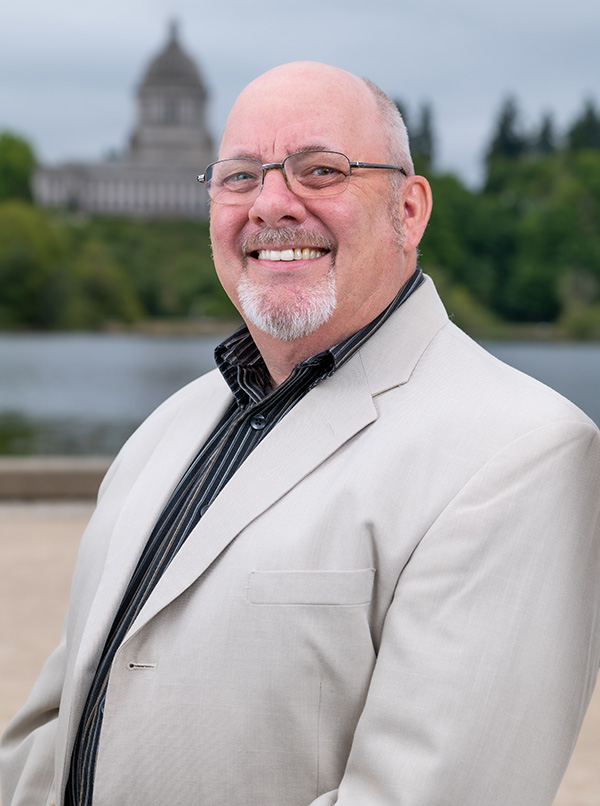
By William Westmoreland, Chief Executive Officer, Pacific Mountain Workforce Development
On July 9, PacMtn welcomed representatives from the Washington State Department of Commerce, Employment Security Department, Office of Equity, Washington Workforce Association, and organizations from across our five-county region for a Community Reinvestment Program site visit and partner summit.
The gathering was intentionally designed to be more than a program update. We brought state leaders together with participants, small business owners, education and training partners, Tribal partners, service providers, community representatives, and PacMtn staff to examine what is working, speak honestly about what is not, and identify how we can build a stronger approach together.

The clearest theme of the day was also the simplest: Lasting economic change does not come from one program, one service, or one organization. It happens when partners align around the outcome a person, family, employer, or community is trying to achieve.
Starting with the outcome
At PacMtn, we have spent years challenging ourselves to look beyond enrollment numbers and short-term activity. Those figures are important, but they do not tell us whether someone completed training, entered a career with meaningful wages, retained employment, developed financial stability, or was able to avoid returning to the same cycle of crisis.
Our Opportunity Model begins with the desired outcome and works backward.
What occupation can provide a path toward self-sufficiency? What skills does the participant need? What are regional employers looking for? What financial, transportation, housing, childcare, or other barriers could prevent the participant from completing training or keeping the job? Which partners and resources need to be brought together?
This approach often requires a deeper investment of time and resources. It also produces a different kind of result. The goal is not simply to help someone get a job. The goal is to help them build the skills, financial foundation, employer connections, and long-term support needed to remain employed and continue moving forward.
That philosophy shaped nearly every conversation during the visit—from occupational training and apprenticeships to matched savings, financial coaching, rural access, entrepreneurship, and small business development.
Financial stability is part of workforce success
The discussion reinforced something we have increasingly seen in our own data and participant experiences: training and employment alone are not always enough to create lasting stability.
A person can earn a credential and secure a higher-paying job while still facing debt, an immediate loss of public benefits, unreliable transportation, unstable housing, or no savings to absorb the next emergency. Without a plan for those transition points, even a successful placement can remain fragile.
This is why PacMtn is strengthening the role of financial coaching within our service model. Career coaching helps someone prepare for and enter employment. Sector strategies connect that person to occupations and employers with genuine regional demand. Financial coaching helps turn increased earnings into stability, resilience, savings, and eventually asset-building.
Our emerging “pod” approach brings those functions together so that a participant is supported by a career coach, financial coach, and sector strategist working toward a shared outcome. Rather than handing someone from program to program, the intention is to create one connected pathway from their current circumstances through training, employment, retention, and economic mobility.
Partnership is not an accessory to the model—it is the model
The visit also demonstrated why regional workforce development must be collaborative by design.
Centralia College shared how co-location and stronger coordination with WorkSource support warm handoffs and continuity for students as they move from career exploration into training and back into employment support. Enterprise for Equity highlighted entrepreneurship as a critical workforce pathway, particularly for people whose family responsibilities, lived experience, or circumstances make traditional employment difficult. Tribal partners discussed the value of designing engagement around the priorities and culture of the community rather than asking communities to adapt to a predetermined service model.
We also heard how the Local Advisory Team and regional intermediary, Impact 907, will bring community voice more directly into regional planning and investment decisions. America Works, PacMtn’s new service-delivery partner, joined the conversation at the beginning of its work in our region—creating an important opportunity to build shared expectations around outcomes from the start.
Our apprenticeship work provided another example. A new memorandum of understanding with the South Sound Building and Construction Trades Council formalizes collaboration around outreach, referrals, workforce planning, career exploration, pre-apprenticeship, and employer engagement. The agreement represents two years of relationship-building and a recognition that workforce development, education, labor, employers, and community partners cannot operate in separate lanes if we expect people to move successfully into family-wage careers.
When partnership works well, the customer shouldn’t have to understand which organization owns each service or which funding stream pays for it. They should experience one connected system.
The impact became real through stories
The data presented during the visit showed meaningful momentum.
PacMtn exceeded its annual targets for Career Accelerator incentives, issuing 174 incentives and investing approximately $132,000 to help participants complete training. Economic Security for All outcomes also exceeded several established targets. Through the latest small business grant cycle, PacMtn awarded $94,332 to 20 businesses across all five counties after receiving 170 applications requesting nearly $1 million. Fifty-two percent of applicants identified as businesses owned or led by people of color.
But the stories shared by participants and businesses showed what those numbers actually mean.
A participant described receiving enough support to focus on finding employment that was right for him rather than accepting the first available job. He received help refining his résumé, learning about regional opportunities, and securing reliable transportation for his commute.
Representatives from the Quinault Indian Nation shared that roughly 30 young people participated in an earlier effort, with more than half still working a year later. Participants used their resources to secure transportation and housing, resolve education-related costs, and take part in cultural experiences such as Tribal Canoe Journeys.
Unlimited Aviation Services used its small business award to purchase industry-standard training materials, expand aviation instruction, and prepare more students for Federal Aviation Administration testing. The Posh Pescatarian used its grant to support training and equipment while giving young workers in a rural Mason County community meaningful first-job experiences that included much more than entry-level restaurant tasks. Employees learned about marketing, revenue, labor costs, customer service, and the transferable skills that can support their next step.
These are different stories, but the common thread is clear: the investment became more powerful because it was connected to a larger pathway.
Using what we learn to improve what we do
The day was not limited to celebrating success. Partners raised important questions about rural access, transportation, broadband, program rules, administrative burden, matched savings participation, debt reduction, cultural responsiveness, and how limited resources should be targeted.
Those conversations matter.
Data is not useful if it only confirms what we already believe. We must use it—alongside participant experience, employer feedback, and community knowledge—to adjust our strategies and produce better outcomes.
That may mean refining when a participant is ready for a matched savings account. It may mean expanding financial coaching before a household reaches a crisis point. It may mean tailoring outreach and services more intentionally for Tribal nations, communities of color, rural residents, justice-impacted individuals, or different categories of job seekers. It may mean changing program rules that unintentionally make it more difficult for people to succeed.
The state leaders in the room did not simply ask what PacMtn had accomplished. They asked what we were learning, what barriers we were seeing, and what could be changed to make these investments more effective. That openness created space for a genuine policy and systems conversation—not just a compliance update.
Moving forward together
There are many resources in our communities, but their value depends on whether people can find them, access them, and use them together at the right time.
That is the work ahead of us.
PacMtn will continue strengthening financial coaching, aligning training with occupations that offer meaningful wages, expanding apprenticeship and entrepreneurship pathways, improving employer engagement, deepening relationships with Tribal nations and community partners, and using data to understand what happens long after someone exits a program.
We will also continue creating space for honest conversations with our state partners about what is working and what needs to evolve.
No single organization represented at the summit can achieve these outcomes alone. Together, however, we can create a workforce system that does more than deliver individual services. We can build connected pathways that help people move from crisis to stability, from stability to self-sufficiency, and from self-sufficiency toward genuine economic mobility.
That is the opportunity in front of us—and it is an opportunity we are committed to building together.